
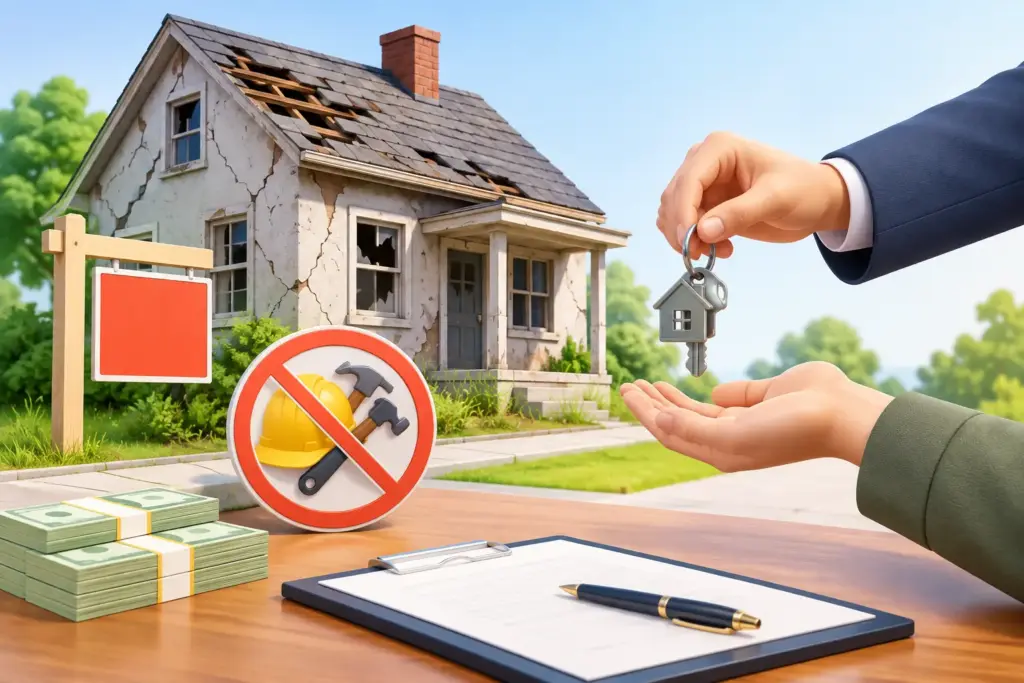
A condemnation notice can make a home feel impossible to sell. You may be worried about code violations, mounting repair costs, a vacant property, or a deadline from the city. The good news is that learning how to sell condemned property starts with understanding what the notice actually means and choosing a buyer who can handle the condition as-is.
You do not have to pour money into a house you no longer want or cannot afford to repair. Depending on the order, you may be able to sell before the deadline, transfer the property to a cash buyer, or pursue a different resolution with the local authority. The right path depends on the type of condemnation, the condition of the home, and how much time you have.
First, Find Out What “Condemned” Means in Your Case
“Condemned” is often used broadly, but not every notice means the same thing. A city or county may declare a property unsafe to occupy because of serious issues such as structural damage, fire damage, exposed wiring, plumbing failures, mold, lack of utilities, or major code violations. In some cases, the property may be posted as uninhabitable until repairs are completed.
That is different from an eminent domain action, where a government agency seeks to acquire private property for a public project. It is also different from a routine code violation or a citation that has not yet resulted in a formal condemnation order.
Read every notice carefully. Look for the issuing agency, the violations listed, repair or compliance deadlines, hearing dates, fines, and whether the order prohibits occupancy, sale, or both. Most condemnation orders do not automatically prevent a sale, but they can affect what a buyer is willing to pay and how quickly a conventional lender will approve financing.
If the language is unclear or you face a demolition order, tax lien, or legal action, speak with a qualified real estate attorney or contact the local code enforcement office. Getting clear answers early can prevent a costly mistake.
Can You Sell a Condemned House?
In many situations, yes. You can often sell a condemned house as-is as long as you disclose the known condition and comply with applicable local rules. The buyer must understand that they are purchasing a property with violations, repair obligations, or possible restrictions.
A traditional retail sale can be difficult because most buyers need mortgage financing. Lenders generally require a home to meet minimum property standards before approving a loan. If the roof is failing, the electrical system is unsafe, or the house cannot legally be occupied, an ordinary buyer may not be able to close at all.
That does not mean the property has no value. Investors and direct cash buyers may evaluate the home based on its location, lot value, repair scope, resale potential, and local market demand. They are not looking for perfect paint, updated kitchens, or a move-in-ready inspection report. They are looking for a realistic deal with the facts on the table.
How to Sell Condemned Property As-Is
The most practical approach is usually to gather the facts, set honest expectations, and sell to a buyer with the funds and experience to take on the work. Trying to hide the notice or make cosmetic fixes around major safety issues will only create more risk.
Gather the records you already have
You do not need a perfect file, but the buyer will need enough information to assess the situation. Collect the condemnation notice, code enforcement reports, repair estimates if you have them, photos, tax information, and any documentation related to liens, insurance claims, permits, or prior repairs.
If you inherited the home, bring together probate documents or estate paperwork as well. If more than one person owns the property, all owners will generally need to agree to the sale. These details can affect timing, but they do not necessarily stop an as-is transaction.
Be direct about the condition
Disclose what you know. Tell prospective buyers about the condemnation order, vacancy status, utility shutoffs, water damage, fire damage, structural concerns, tenant issues, and any city deadlines. This protects you from disputes later and helps the buyer make a credible offer instead of walking away after discovering a problem.
Being honest does not mean you need to diagnose every issue yourself. Share the records you have and avoid making promises about repairs, permits, or the cost to bring the home up to code unless you have reliable documentation.
Get an as-is cash offer
A cash buyer can be a better fit when a condemned property cannot qualify for conventional financing or when you do not want to spend months managing repairs and showings. The buyer should inspect the property, review the public records and notices, explain their offer, and give you time to decide without pressure.
At Royal Home Solutions, homeowners can request a no-obligation cash offer without cleaning, repairing, staging, or listing the house. An offer may be available within 24 hours, and qualifying sales can close in as little as 7 days through a licensed title company, with no agent commissions and closing costs covered.
Confirm the closing process with a title company
A licensed title company can identify liens, unpaid taxes, recorded code enforcement actions, ownership issues, and other items that must be addressed before closing. Some issues are paid from the seller’s proceeds. Others may need to be negotiated, released, or resolved before title can transfer.
Do not assume a cash sale removes every legal obligation. It removes the financing contingency and the need to repair for a retail buyer, but outstanding liens and government orders still need careful attention.
Your Main Options When a Property Is Condemned
Your best option depends on your deadline and the amount of equity in the property. If the repairs are manageable and you have the funds, you may be able to correct the violations, request a reinspection, and later sell through a traditional listing. That path can produce a higher sale price, but it also requires time, cash, permits, contractors, and tolerance for surprises.
If repairs are extensive, selling as-is to a cash buyer may offer more certainty. You will likely receive less than the price of a fully renovated, financeable home, but you avoid paying for major construction, holding costs, agent commissions, repeated showings, and a buyer’s financing falling through.
In some cases, demolition and selling the land may make sense. This is more common when the structure is beyond repair but the lot has value. Before taking that step, confirm demolition costs, permit requirements, environmental rules, and whether the city has already issued an order.
If the property is part of an eminent domain proceeding, do not treat it like a normal distressed sale. You may have rights to compensation and should get legal guidance before accepting an offer or signing an agreement.
Mistakes That Can Make a Difficult Sale Harder
The biggest mistake is waiting until fines, foreclosure, taxes, or a demolition deadline leave you with fewer choices. Contacting buyers early gives you more time to compare options and resolve title questions.
Another mistake is spending money on repairs that do not change the property’s legal status. New flooring will not solve a failing foundation, an unsafe electrical panel, or an occupancy prohibition. Before investing in any work, ask code enforcement exactly what is required to lift the order and obtain written estimates from qualified contractors.
Finally, be cautious with anyone who promises an unrealistic price without seeing the home or reviewing the notices. A fair as-is offer should reflect the home’s condition and the buyer’s cost to repair, permit, carry, and resell it. Clear terms matter more than a headline number that disappears before closing.
Questions Homeowners Often Ask
Do I have to repair a condemned house before selling it?
Usually, no. You may be able to sell it as-is to a cash buyer who accepts the repair work and code compliance responsibilities after closing. Local rules and the exact language of the order still matter, so verify whether there are deadlines or restrictions that apply to a transfer.
Will a condemned property sell for anything?
It can. Value depends on the land, neighborhood, repair scope, liens, market demand, and whether the structure can be restored. Even severely distressed homes can be worth purchasing when the numbers support rehabilitation or redevelopment.
Can I sell if I owe back taxes or have code fines?
Often, yes. A title company can calculate what must be paid at closing. If the sale price is enough, those amounts may be deducted from the proceeds. If they exceed the available proceeds, you may need another arrangement before the sale can close.
A condemned home is a serious problem, but it does not have to become a permanent burden. Get the facts, protect yourself with honest disclosure, and choose the option that gives you the clearest path forward with the least added stress.
Related Articles
How to Sell a Hoarder House Without Cleaning It
Learn how to sell a hoarder house as-is, avoid costly cleanup and showings, and choose a private, reliable path to a fast cash closing with no commissions.
Read More
Selling Inherited Property Guide: What to Do First
Use this selling inherited property guide to handle probate, taxes, repairs, and sale options with less stress, fewer delays, and a clear next step today.
Read More
Cash Buyers Versus Agents for Your Home Sale
Compare cash buyers versus agents to see which home-selling path offers the speed, certainty, privacy, and outcome your situation needs most right now.
Read More